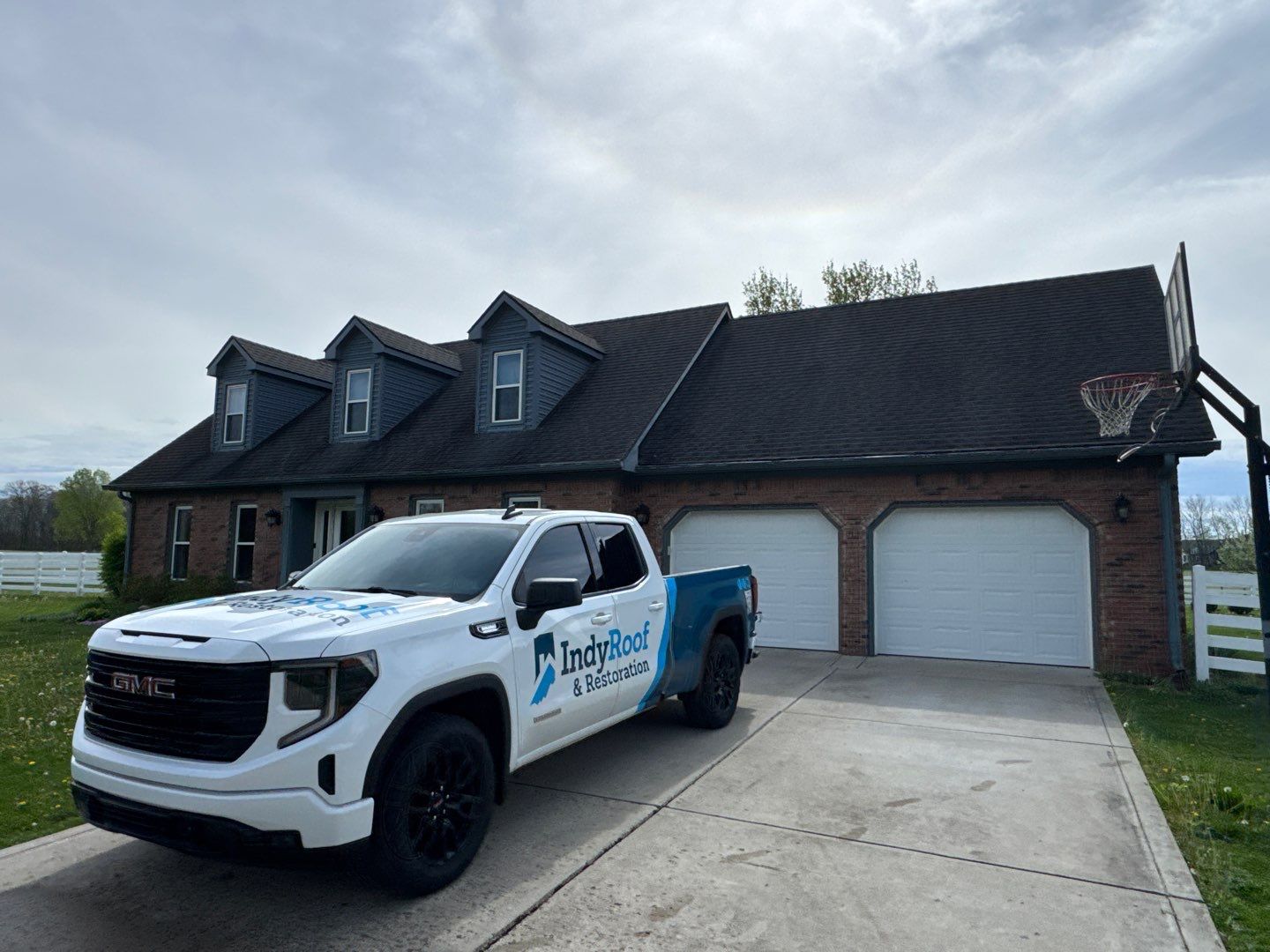
The Hail Claim the First Adjuster Denied
After a June storm dropped hail across a Straughn neighborhood, a homeowner filed a claim and was denied, with the first adjuster writing the granule loss off as age. He had nearly accepted it when he called us for a second look. We walked the roof on a re inspection, chalked fresh bruising on each slope, photographed the dented soft metal on his gutter caps and a vent, and pulled a shingle that showed a clear mat fracture, the kind of impact damage that does not come from age. We pulled the weather data for the date to confirm the event. With that documentation assembled, the claim was reopened and approved. He paid his deductible and the replacement moved forward as a covered loss. The damage had been real the whole time. What changed was that someone put the evidence in front of the insurer in a form that was hard to argue with.
The No Damage Call We Talked Them Out Of
A Straughn family called us convinced a storm had wrecked their roof, ready to file that day. A neighbor's roofer had told them the whole street was getting new roofs. We went up expecting to confirm it and could not. The granule coverage was solid, there was no bruising on any slope, the soft metals were clean, and the few displaced shingles were an easy repair unrelated to the storm. We told them plainly that there was no claim worth filing, made the small repair, and handed them photos for their records. They were surprised, and then relieved, because a withdrawn claim can sit on a record for nothing. That call cost us a replacement job. It earned us a family that has since sent two neighbors our way, which is how most of our Straughn work actually comes in.
The Underpaid Estimate We Supplemented
One Straughn homeowner had an approved claim, but the adjuster's estimate was clearly light. It left off the ice and water shield at the eaves and valleys, counted a single pipe boot when three were cracked, and underestimated the decking. None of that was bad faith, just the product of a fast inspection. We read the estimate line by line, documented each missing item with photographs, and attached the code references where they applied. The supplement was approved within a few weeks, and the final scope reflected what the roof genuinely needed rather than the rushed first pass. The homeowner still paid only the deductible. The difference between the first estimate and the supplemented one was the difference between a roof that met code and one that quietly did not.
The ACV Surprise
A Straughn homeowner with an older roof had a hail claim approved and was shaken when the payment came in far below the cost of the work. Nothing had gone wrong with the claim. Her policy paid actual cash value, so the payment was reduced heavily for the roof's age, and she covered the difference plus her deductible. We could not change the coverage after the fact, since it was locked in for that storm, but we gave her an accurate scope and an honest cost so she could plan the project realistically, and we showed her exactly where on her declarations page the coverage type was written so she could review it for the future. It was a hard lesson, and it is the reason we tell every Straughn homeowner to learn their coverage type before a storm rather than during a claim.
What Our Free Storm Inspection Includes
When we come out after a Straughn storm, the first thing you get is an honest answer about whether you have a claim at all. Our crew walks every slope and checks the field for hail bruising and wind damage, inspects the soft metals on the gutters, vents, and AC unit that confirm a hail event, looks at the flashings and valleys, and checks the attic and interior for any leaks. We document the storm date and pull the weather data. You get photographs you keep, claim or no claim, and a written assessment in plain language. Here is what to expect on the visit.
- A full inspection of every slope, valley, flashing, and penetration
- Soft metal checks on gutters, vents, and the AC unit to confirm hail
- Storm date and weather documentation for the claim file
- Photos you keep and a written, plain language assessment
- A straight answer on whether a claim is worth filing, including when it is not
The Storm Chaser We Replaced
A homeowner had already signed with an out of town crew that knocked on the door after a wind event, promised a free roof, and offered to cover the deductible. Before any work started, she got uneasy and called us. We explained that covering a deductible is illegal in Straughn and that the promise was a warning sign, not a deal. We gave her a documented assessment of the actual wind damage, which was real and claimable, and walked the adjuster meeting with her. The claim was handled properly, the work was done by a local crew she could find again, and the warranty came from a company still operating in Straughn. She got the roof she needed without the risk that comes with a signature handed to someone passing through.
The Engineering Report That Settled It
One Straughn claim came down to a genuine standoff. The insurer maintained the damage was age, the homeowner and our crew documented it as hail, and a re inspection did not break the tie. For a dispute of that size, an independent engineering assessment was the right tool. The engineer examined the roof, evaluated the damage pattern against the storm data, and produced an objective report. That report carried the weight the back and forth could not, and the claim was approved. An engineering assessment is not free and is not needed on routine claims, but for a high value disputed case where age versus storm is the whole argument, it can turn a denial into a covered replacement. Knowing when to reach for it, and when not to, is part of handling claims honestly. We reach for the bigger tools only when a Straughn claim genuinely calls for them, and we tell you plainly when it does not.
The Second Storm That Complicated the Claim
A Straughn homeowner came to us after a claim stalled because two storms had passed through that season, and the insurer was disputing which one caused the damage. She had not filed after the first event, assuming the roof looked fine, and by the time the second storm made the damage obvious, the cause was muddied. We documented the current damage thoroughly, pulled weather data for both events, and laid out an assessment that tied the claimable damage to a covered storm within the policy window. The claim was resolved, but the lesson stuck with her. Filing promptly after each major event, even just to get an inspection on record, is what prevents this exact tangle. A roof that looks fine from the ground after a storm has fooled many homeowners, and the window to file does not wait.